
From Cylinders to On-Demand Gas: Workshops Adopt Oxyhydrogen Welding
From Cylinders to On-Demand Gas: Workshops Adopt Oxyhydrogen Welding
2025-11-28
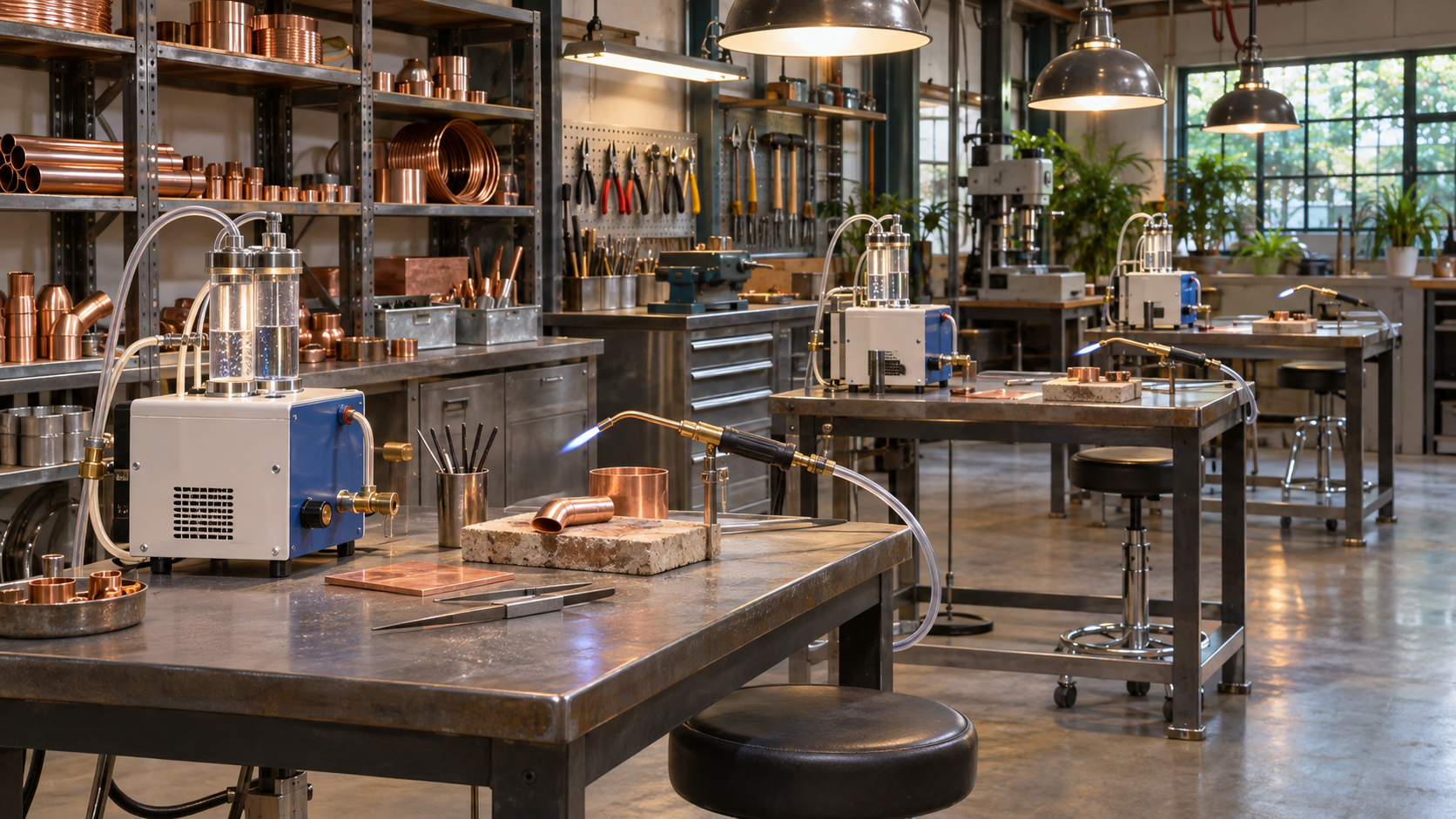
On-demand oxyhydrogen generation is replacing stored cylinder gas in jewelry benches, HVAC brazing and repair shops. What drives the shift, and what buyers should verify.
For decades, small welding and repair shops bought their flame from a cylinder: acetylene, LPG or hydrogen, delivered, stored and refilled. Oxyhydrogen generators change that equation by making the gas at the bench — water and electricity in, hydrogen-oxygen flame out. The shift is most visible in the segments where cylinders were always awkward: jewelry benches, HVAC brazing, motor repair and eyewear and trophy fabrication.
What makes on-demand gas attractive at the bench
- No cylinder logistics: no refills, no storage permits, no transport of pressurized gas through a workshop.
- Gas only when running: production starts with the switch and stops with it, unlike a cylinder that is always full and always present.
- A repeatable flame: at its rated output the flame stays consistent across a session, which matters for fine brazing where temperature control is the skill.
Why compact models drove the shift
Early oxyhydrogen systems were industrial-scale installations. The current generation of bench-top machines — 300 to 2,000 L/h output at 220 V single phase — fits a jewelry bench or repair station the way a small TIG unit does. Our HHO generator guide shows how the DY300 to DY20000 range maps output to job size; the compact end of that range is what opened the door for small workshops.
What to watch when evaluating the technology
- Flame size vs workpiece: HHO flame excels at fine work; heavy plate welding still belongs to conventional processes.
- Water quality: machines run on purified water; workshops should plan the supply before switching.
- Protection details: flashback arrestors and dry-burn protection vary between suppliers — ask for the specifics before ordering.
The equipment is established technology, so the buying decision comes down to matching output to workload — while also confirming water supply and protection features for the bench, not output alone. Workshops ready to test it can start with an entry machine such as the DY300 and scale from real usage.
LEAVE A MESSAGE
WE EXPORTED TO