
Hydrogen Generator Kit for Cars: How an HHO Kit Supports Fuel Combustion
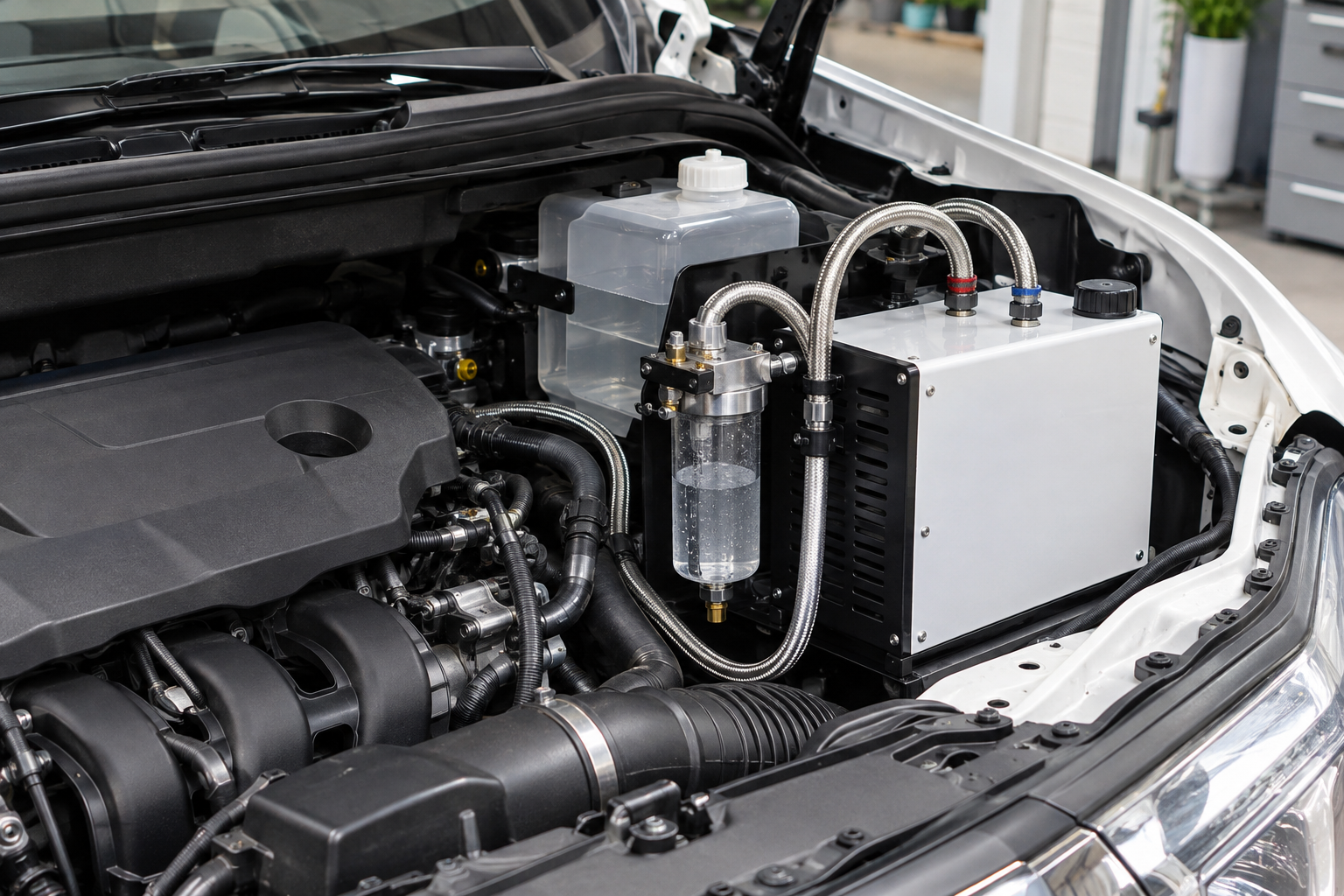
A hydrogen car kit is a compact PEM generator that feeds a small amount of HHO gas into the intake to support cleaner fuel combustion. This guide explains the system parts, the manufacturer's performance targets, and what installers should verify.
A hydrogen generator kit for cars — often called an HHO kit or hydrogen fuel-saver kit — is a small electrolysis unit that produces hydrogen and oxygen on board and feeds the mixture into the engine intake. The manufacturer lists performance design targets for the kit range covering fuel economy, power output and exhaust emissions, but publishes no test conditions, vehicle types or measurement methods for those figures. Installers should therefore treat them as design goals, verify results on the specific vehicle before quoting any numbers, and present them accordingly to end customers.
What is inside the kit
- PEM hydrogen generator: proton-exchange-membrane electrolysis running on low power, producing HHO gas on demand rather than storing it.
- Water tank and water–gas separator: the reservoir feeds the cell, and the separator returns moisture so dry gas reaches the intake.
- Microcomputer control module: a custom high-precision controller regulates production to the engine’s operating state.
- Harness, fuse and relay: plug-and-play wiring with protection, so the kit switches with the ignition.
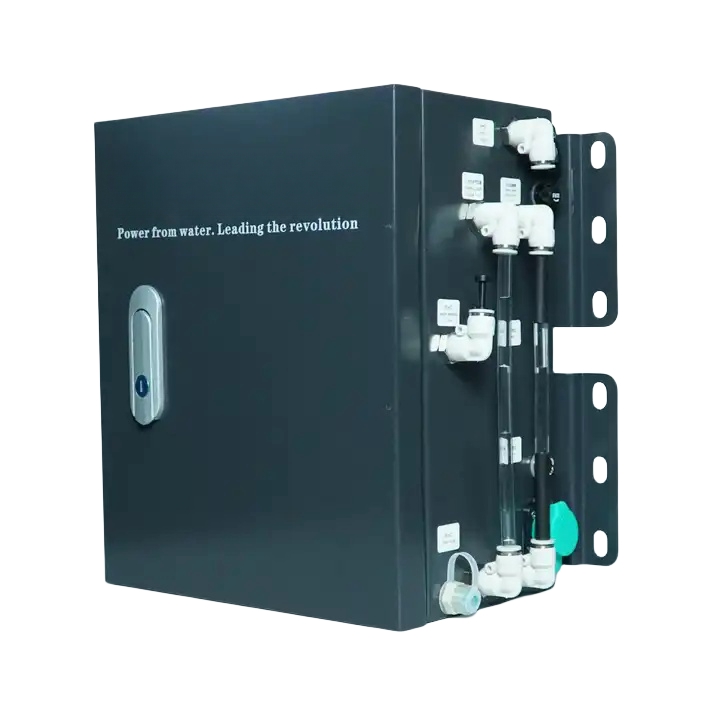
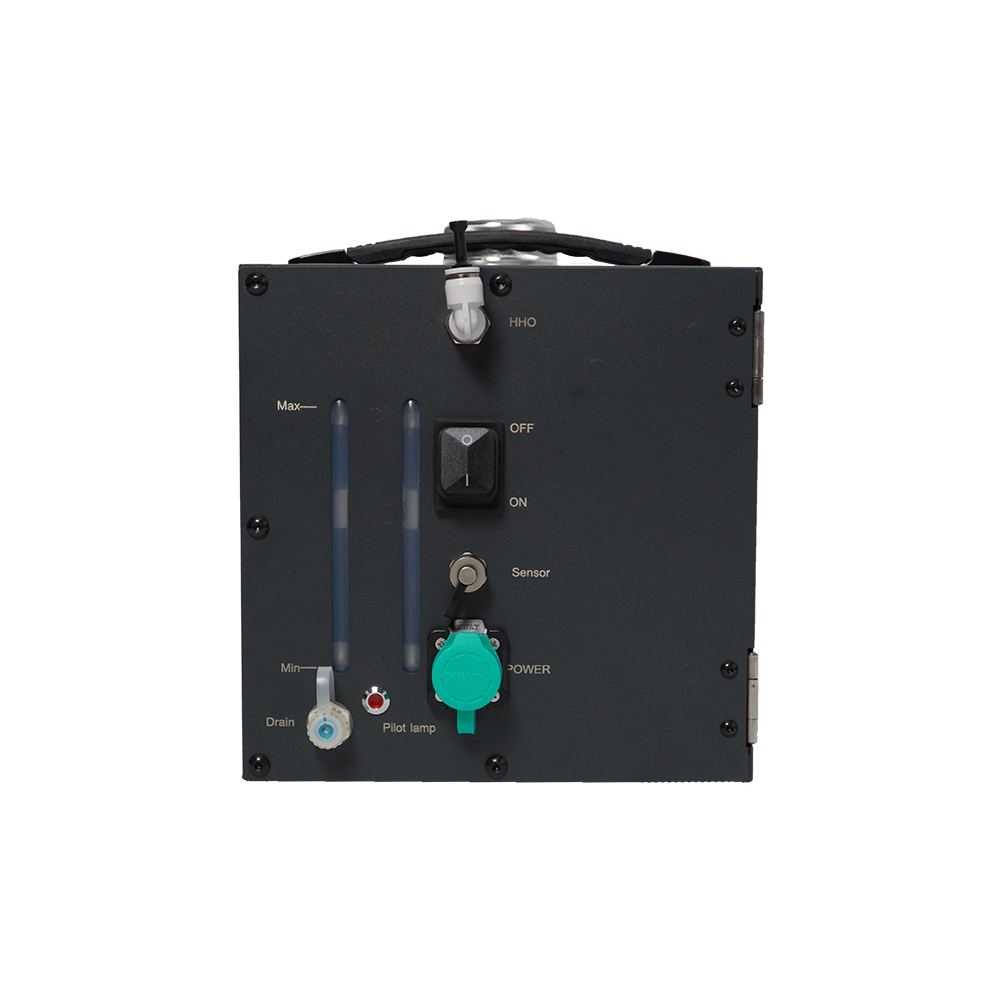
The whole kit integrates into one box that mounts in the engine bay; you can see the layout on the hydrogen generator kit for car page.
Why PEM matters for vehicles
The kit uses a PEM (proton exchange membrane) cell rather than a liquid electrolyte bath. PEM operation avoids corrosive electrolyte in a moving vehicle, keeps maintenance to distilled-water top-ups, and allows low-power operation from the car’s electrical system. Continuous HHO feeding into the intake is the same principle behind the dedicated carbon-cleaning machines described in our hydrogen carbon cleaning guide; the car kit applies it during normal driving, while the carbon-cleaning machine delivers it as a workshop service session.
What installers and resellers should verify
- Voltage compatibility: confirm the control module matches the vehicle’s 12 V or 24 V electrical system before quoting.
- Engine size range: confirm with the supplier which displacement range the kit configuration covers; larger engines need the truck-kit variant.
- Water refill interval: tank size determines how often the driver tops up — ask for the interval at typical mileage.
- Local regulations: check whether aftermarket intake devices require disclosure or approval in the destination market.
For distributors, the car kit is the entry product of the vehicle line; the hydrogen generator kit for trucks covers heavy-duty engines. Contact us with your target vehicle mix and market, and we will recommend the matching configurations.
LEAVE A MESSAGE
WE EXPORTED TO