
Is Hydrogen Carbon Cleaning Worth It? How Oxyhydrogen Engine Carbon Cleaning Works
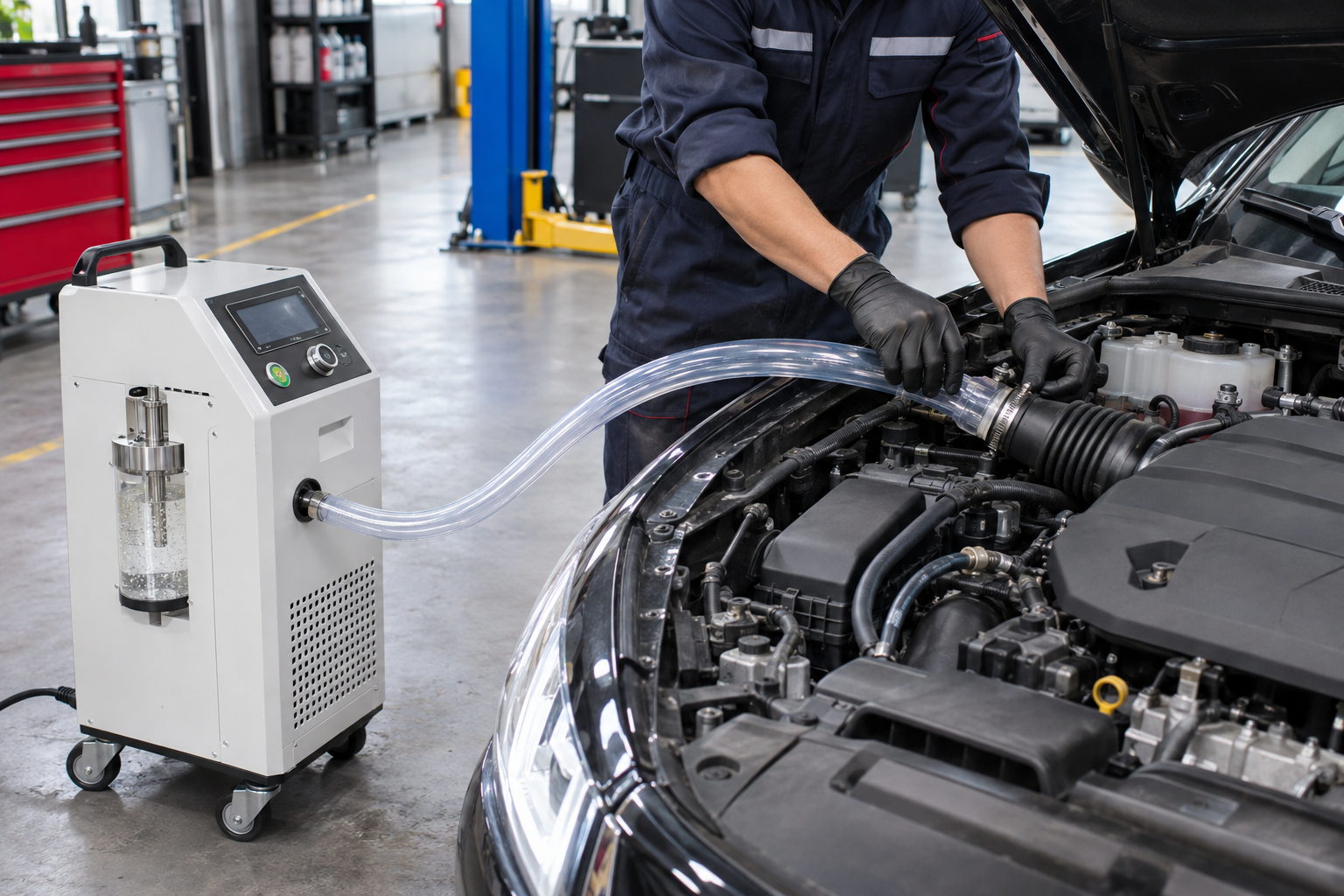
Hydrogen carbon cleaning feeds an HHO mixture into the running engine to loosen carbon deposits without disassembly. Here is how the process works, what a garage session involves, and how it compares with foam or chemical cleaning.
Garage owners comparing carbon-cleaning services usually ask two questions: does hydrogen cleaning actually remove deposits, and what equipment does a bay need? This guide explains the process step by step and where it fits next to disassembly cleaning and chemical additives.
Why carbon builds up in gasoline engines
Short trips, frequent idling and incomplete combustion leave carbon deposits on pistons, valves and the combustion chamber. Over time the deposits reduce combustion efficiency, which the driver notices as rough idle, higher fuel consumption and occasional knocking — symptoms many workshops now package into a paid carbon-cleaning service.
How the hydrogen process works
- The decarbonizing machine electrolyzes water and electricity into an oxyhydrogen (HHO) gas mixture.
- The gas is fed into the engine through the air intake while the engine idles.
- Hydrogen burns faster and hotter than gasoline, helping burn off accumulated carbon during the session; the result depends on deposit level and engine condition, and badly fouled engines still need teardown work.
- Loosened residue exits through the exhaust.
A session on the DY1500 (CCS1500) carbon cleaning machine is specified by the manufacturer at around 15 minutes of engine running time, which is why many garages schedule it as a quick add-on service rather than a half-day job.
How it compares with other methods
| Method | Disassembly | Chemicals | Typical session |
|---|---|---|---|
| Hydrogen (HHO) cleaning | None | None | About 15 minutes idling |
| Foam / chemical liquid cleaning | None, but solvent soaks | Yes | 30–60 minutes plus soak |
| Full teardown cleaning | Yes | Yes | Hours to days |
Hydrogen cleaning does not replace teardown work on a badly fouled engine, and honest garages present it that way: it is a maintenance procedure for engines with moderate deposits, and repeated sessions can be scheduled as part of regular service. For vehicles with catalytic converters or older exhaust components, inspect the exhaust system after the service as part of normal workshop practice.
Operating notes for the service
- Run the session in a ventilated bay, with the exhaust extraction active.
- Check the machine’s water level before starting; the unit consumes roughly 1 litre of purified water per hour of operation.
- Connect the intake hose according to the machine manual and set the session timer before starting the engine.
- Never let the machine run without water, and shut down if the engine shows abnormal behavior during the session.
- Operators should follow the manual’s protective-equipment guidance when working around the running engine.
What a garage needs to offer the service
- The machine: the DY1500 (CCS1500) specification produces 1,500 L/h of HHO gas from a 5 kW, 220 V power supply — enough for cars and light vehicles in a single-bay setup.
- Purified water: the machine consumes roughly 1 litre per hour of operation.
- A trained operator: connect the intake hose correctly, set the timer, and keep the bay ventilated during the session.
For workshops and service chains considering the service as a revenue line, request a quote for the oxyhydrogen carbon cleaning machine and ask about operator training and consumable requirements for your market.

LEAVE A MESSAGE
WE EXPORTED TO